

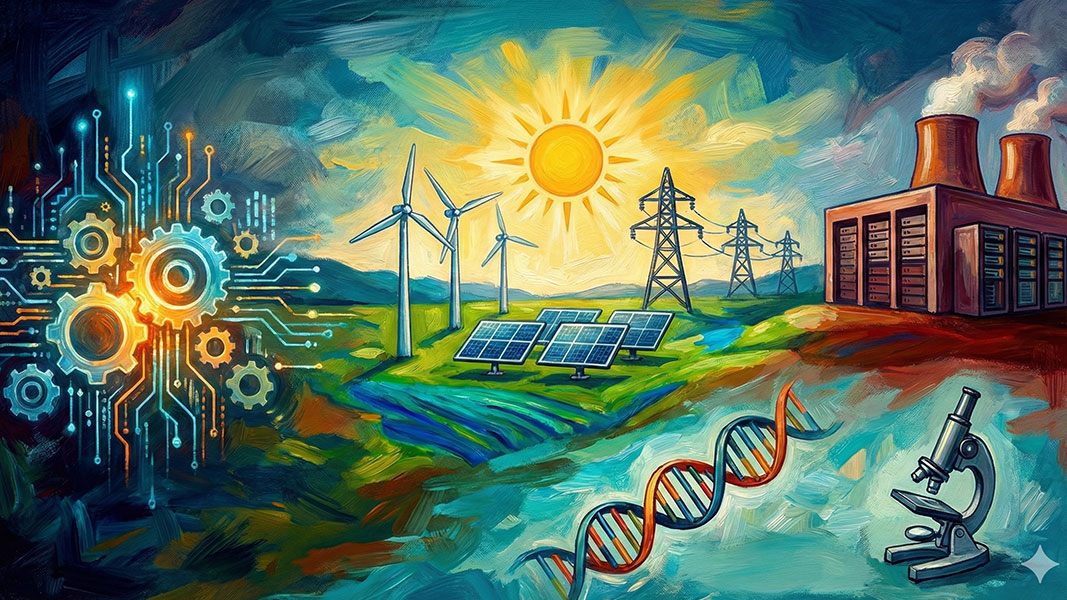
While the initial hype cycles of Artificial Intelligence (AI) and the green transition have perhaps passed, 2026 trends are poised to be where these technologies become much more structural – creating new winners, losers, and distinct asset classes.
Below are four key investment trends likely to define portfolios in 2026.
1. The rise of “agentic” AI and physical infrastructure
By 2026, the AI narrative is expected to shift from “generative” (creating text/images) to “agentic”. These are AI systems capable of executing complex, multi-step workflows autonomously—acting as employees rather than just tools.
For investors, the opportunity may move beyond the software giants to the physical infrastructure required to keep these “agents” running 24/7.
- Data center real estate: The demand for localised, low-latency processing power is skyrocketing. Real Estate Investment Trusts (REITs) focused on data centers and server farms could be likely to see sustained growth.
- Thermal management & cooling: As chips become more powerful, they run hotter. Companies specialising in liquid cooling and advanced thermal management for server racks could become essential utility players.
- The energy cap-ex boom: AI creates a voracious demand for electricity. We may see a “utilities supercycle” where boring, steady utility companies transform into growth stocks because they hold the grid capacity needed by big tech.
2. Energy security as the new green
In 2026, the driver for renewable energy investment will likely shift from purely “saving the planet” to “securing the grid.” Geopolitical fragmentation means nations are prioritising energy independence above all else.
- Grid Modernisation: The limitation for renewables isn’t generation; it’s transmission. Expect heavy capital flows into companies that manufacture high-voltage cables, transformers, and smart-grid software that can balance intermittent solar/wind with steady baseload demand.
- Nuclear Renaissance: Small Modular Reactors (SMRs) and uranium miners may see increased attention worldwide as data centers and governments look for carbon-free, always-on baseload power that wind and solar cannot provide alone. Australia might not have nuclear power but it does have a lot of uranium.
3. “Friend-shoring” and supply chain resilience
The era of hyper-globalisation is giving way to regionalisation. In 2026, companies will continue to move manufacturing out of geopolitical hotspots and into friendly neighboring nations – a trend known being referred to as “friend-shoring.”
- Emerging market manufacturing: Countries like Mexico, Vietnam, and India are becoming the new factory floors of the world. Exchange Traded Funds (ETFs) focused on these specific emerging markets may outperform broader global indices.
- Robotics and automation: As manufacturing returns to high wage countries (like the US and parts of Europe), companies must automate to stay competitive. Industrial robotics will likely see a surge in capital expenditure.
4. Healthcare: The “bio-revolution” continues to mature
The massive success of GLP-1 agonists (weight-loss drugs such as Ozempic) in 2024-2025 opened the floodgates for investment in metabolic health. By 2026, the focus will likely broaden.
- AI driven drug discovery: We are approaching a tipping point where AI significantly shortens the timeline for bringing new drugs to market. Biotech firms with proprietary AI discovery platforms (rather than just a single drug pipeline) will begin to attract premium valuations.
- Personalised medicine: Advancements in CRISPR and gene editing are moving from experimental to clinical application. Companies that provide the “pick and shovel” tools for genetic sequencing and testing are vital to this ecosystem, regardless of which specific drug succeeds.
If you’re interested in learning how to trade and invest for yourself, feel free to call (03) 8080 5788 and speak with one of our Advisors, or you can check out our education programs by clicking here.